Reflection
"Have you ever saved a life?"
A question that stopped me cold and taught me something I hadn't expected.
That's the question my 11-year-old daughter asked me, out of nowhere, as we walked to school a few months ago. In the immediate split second, before my mouth could open, I felt first. The feeling was angst, anxiety, maybe even dread. Then, before I could say a word, a second wave washed over me: pride, worth, purpose. It's hard to describe how or why those feelings were even present in response to such a simple question. Was it that anyone would feel that way when asked "Have you ever saved a life?" Or was it the nature of my work, a field that deals in life and death and in all the nuance and circumstance that makes up everything in between?
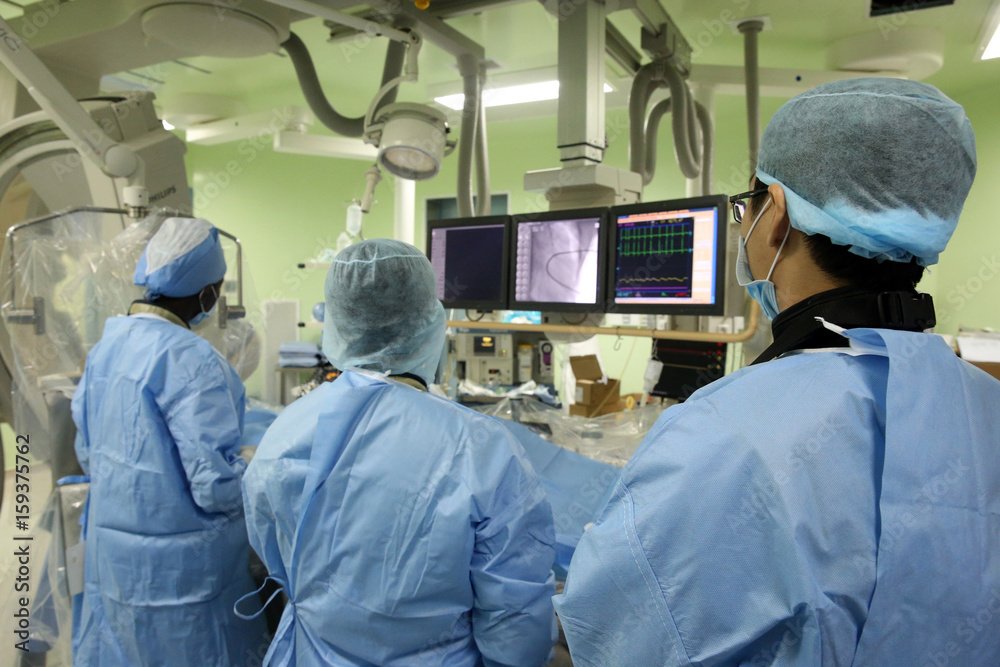
As a vascular neurologist, my job is to do everything possible, medically, ethically, humanistically, to help people survive what is not infrequently the worst day of their lives. The split-second decisions, the second-guessing, and the brutal reality that around a fifth of the patients I care for in the hospital will die today, tomorrow, or sometime in the next three months.
So when I finally opened my mouth, I didn't really know what to say. Logically, yes, I have probably been part of a team that has "saved" hundreds of lives. But internally, in my gut, I felt absolutely torn.
Our field is hard to describe in lives saved. Maybe because doing so means we also have to acknowledge the lives lost. We have to see the thousands who have died on our watch, not because of something we did, but because we are in the brutal business of caring for stroke. If you are a health provider, I suspect you can relate to the dichotomy: we are called to help people, but often the circumstances are far beyond our grasp and we are simply there to support. Support the patient. Support the family. Support a colleague.
But as a layperson, the question takes on a different meaning entirely.
Earlier today I was cooling off from a morning run, looking down at my phone, when I nearly tripped over a middle-aged man wearing a button-up shirt, khaki pants, and a baseball cap, lying across the sidewalk and halfway into the street, spread across an on-ramp. He was clearly overdosing on an opiate. He was on his back, head tilted, legs flexed at the knees and very slowly relaxing until he was completely flat. Mouth open, head back, breathing shallow.
After a few seconds of prodding, he responded with some nonsensical slurring. I started to call 911, at which point he sort of woke up, his speech briefly more intelligible: "They're not going to take me." He began to stand, only to go back down the street from where he started, just before reaching a gnarly concrete staircase. His head started to droop, torso leaning forward, knees doing that classic slow-motion pump, followed by a descent to the ground that left him exactly as I had found him. By then I could hear the sirens of a fire truck, which was fortunate, because this time he was no longer responsive. Breathing had slowed to about eight breaths a minute, shallow. I waved over the emergency workers. They came with the naloxone kit, administered it nasally, and there's a good chance a life was saved.
As a layperson, this incident was very different from my day-to-day experience. It was unexpected. It was personal. It was concrete. And beyond giving me something more confident to say to my daughter, the emotion it stirred was also very different.
After thinking about it for some time now, I am getting closer to understanding the difference. The hospital always comes with a cost. To save someone from something, you have to be prepared that the same intervention may cause harm to someone else. That constant risk-benefit calculation is not just theoretical. It is those rare but real cases, the ones that fell into the wrong category, that I remember most vividly. Saving a life is just the status quo. The conversation you have right before watching someone die is what stays with you. So I think my angst at answering "have you ever saved a life?" is inseparable from having to recall all the suppressed memories of those who didn't make it.
I started SMARTS Health because I no longer want to face that 40-year-old man or 50-year-old woman with a devastating, often catastrophic stroke that I know for a fact could have been prevented with simple blood pressure management, started years earlier. As a physician with a master's in population health and a passion for serving the underserved, I aim to embody a mantra that has guided one of medicine's great preventers:
"Nobody ever thanks you for saving them from the disease they didn't know they were going to get."
William Foege, former CDC Director, instrumental in the eradication of smallpox
That's the work. And it's enough.